
REDiVerify
Intelligent Card Fraud Detection & Analytics for Community Banks and Credit Unions

Level-Up Your Fraud Strategy
Personalized Review of Existing Fraud Rules
BIN Attack Detection & Prevention
Compromised Card Management
Real-Time Risk Scoring & Analytics
Common Point of Compromise Analytics
2-Way Transaction Verification
Around-the-Clock Live Agent Call Center
Geolocation Services
Level-Up Your Fraud Strategy
Institutions that have deployed REDiVerify have experienced:
84%
decrease in fraud loss
80%
decrease in false positives
Seamless Integration.
World-Class Support.
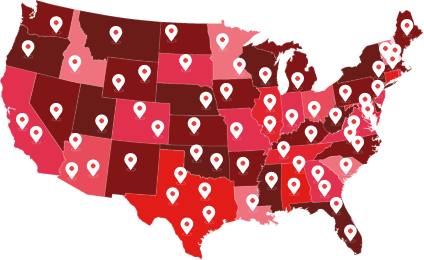
Find out more about what REDiVerify can do for you!
REDiVerify Frequently Asked Questions
What is REDiVerify?
REDiVerify is a card fraud detection and analytics platform for community banks and credit unions. It combines real time risk scoring, configurable fraud policies, behavioral analysis, compromised card management, and direct cardholder verification.
How does REDiVerify evaluate a transaction?
REDiVerify evaluates the transaction details available in the authorization message and compares them with card level, BIN level, and institution level patterns. Rules, velocity, location, merchant activity, prior behavior, and other risk indicators can be combined to determine whether the transaction should be approved, declined, verified, or escalated.
Does REDiVerify analyze every authorization in real time?
When REDiVerify is deployed in the real time authorization stream, it evaluates each authorization message routed through the platform. Some implementations use file based, batch, or analytics only workflows for selected portfolios. Coverage depends on the processor route, data available, and the institution’s selected operating model.
Can REDiVerify make the authorization decision?
Yes, when the implementation places REDiVerify in the authorization path. REDi can apply the institution’s policies and return the configured decision before the transaction reaches the core. REDi can also operate in an analytics only model when the institution does not want REDi to interdict transactions.
How does REDiVerify detect BIN attacks?
REDiVerify monitors activity at the BIN level for rapid enumeration patterns, including large numbers of attempts within seconds or minutes. Institutions can configure thresholds and response policies, quarantine suspicious merchants, and avoid unnecessary cardholder communications while an attack is active.
How does REDiVerify identify counterfeit or skimmed card activity?
For chip enabled cards, REDiVerify can evaluate POS entry mode and identify magnetic stripe or fallback activity that is inconsistent with expected chip use, including fallback activity without a preceding chip failure when that information is available. For magnetic stripe only cards, no single field proves that a card was cloned, so REDi relies on location, velocity, merchant behavior, repeated attempts, historical spending patterns, and Common Point of Compromise analysis.
How does REDiVerify reduce false positives?
REDi reviews the institution’s existing fraud rules and helps convert them into a more focused policy set. Behavioral analysis at the card, BIN, and institution levels helps distinguish normal cardholder activity from meaningful anomalies, while ongoing rule reviews identify policies that should be tuned, consolidated, or retired.
How can a cardholder confirm or deny suspicious activity?
REDiVerify supports two way transaction verification through text message, email, and automated outbound phone calls. Messages are branded for the financial institution and can direct the cardholder into a configurable response and support workflow.
What happens when a cardholder confirms that a transaction is fraudulent?
REDiVerify can place the card in WARM or BLOCKED status through the approved core integration. REDi does not place the card in HOT status, permanently deactivate it, or reissue it. The financial institution retains responsibility for the card’s final disposition and any reissuance.
Can REDiVerify prevent social engineering scams?
REDiVerify can reduce exposure by identifying abnormal transaction behavior, applying transaction specific rules, and contacting the cardholder quickly. No fraud platform can guarantee prevention after a cardholder has voluntarily shared card information and has been manipulated into approving a transaction. REDi can also support proactive branded warnings, one time verification identifiers, and an inbound live agent model that helps reinforce that the institution will not place unsolicited live calls requesting card information.
Does approving one transaction automatically clear later transactions?
No blanket approval period is required. REDi policies can continue evaluating each subsequent authorization, even after a cardholder confirms an earlier transaction. This helps the institution avoid a broad cooldown period that fraudsters may exploit with additional transactions at the same merchant or through the same rule path.
How does REDiVerify handle travel activity?
Travel rules can be configured with specific country codes and, for domestic activity, state or ZIP code detail. Transactions outside the approved travel area can be declined or verified according to institution policy, and REDi can send a notification when the necessary response information is available.
Can REDiVerify help identify where card data was compromised?
Yes. Common Point of Compromise analytics compare transaction patterns across affected cards to identify shared merchants, locations, ATMs, or third party exposure. Reverse merchant searches can also identify other cards used at a suspicious location so the institution can place them on a heightened watch list.
How does REDi manage cards that may be compromised but have not shown confirmed fraud?
Institutions can load compromised card reports or create watch lists within REDiVerify. Policies can then apply heightened monitoring, different limits, targeted communications, or additional verification without automatically closing or reissuing every card.
Is live agent support available outside normal business hours?
Yes. REDiVerify supports an around the clock live agent call center. Live agent calls are inbound. Automated outbound IVR can notify the cardholder and offer a transfer to the institution’s call center, REDi after hours support, or REDi support around the clock, based on the institution’s routing preferences.
Does REDi replace the institution’s dispute and chargeback system?
No. REDiVerify can provide transaction history, verification responses, fraud marking, and an audit trail that supports downstream review. The financial institution and its selected dispute platform remain responsible for dispute intake, chargeback rights, claims processing, and final resolution.
How are instant issue and newly issued cards handled?
Timing depends on how card records reach REDi. When REDi is integrated with the core or another immediate data source, instant issue cards can become available nearly immediately. When a processor or plastic provider sends a later file, REDi can analyze the transactions and synchronize the cardholder record when the card data arrives.
What results has REDi published for REDiVerify?
REDi reports that institutions using REDiVerify have experienced an 84 percent decrease in fraud loss and an 80 percent decrease in false positives. In a separate published case study, EvaBank reported reducing debit card fraud losses by more than 80 percent after deploying REDiVerify. Results vary by institution, portfolio, rule strategy, and implementation.

Innovation Depot
Suite E115
Birmingham, AL 35203
Phone
(205)-533-6425